GTA 6 Landing Page
Visit Live SiteA conceptual landing page for GTA 6 that pushes the boundaries of frontend development. Built to demonstrate mastery of animations, scroll-driven interactions, and immersive web experiences — all while maintaining performance.
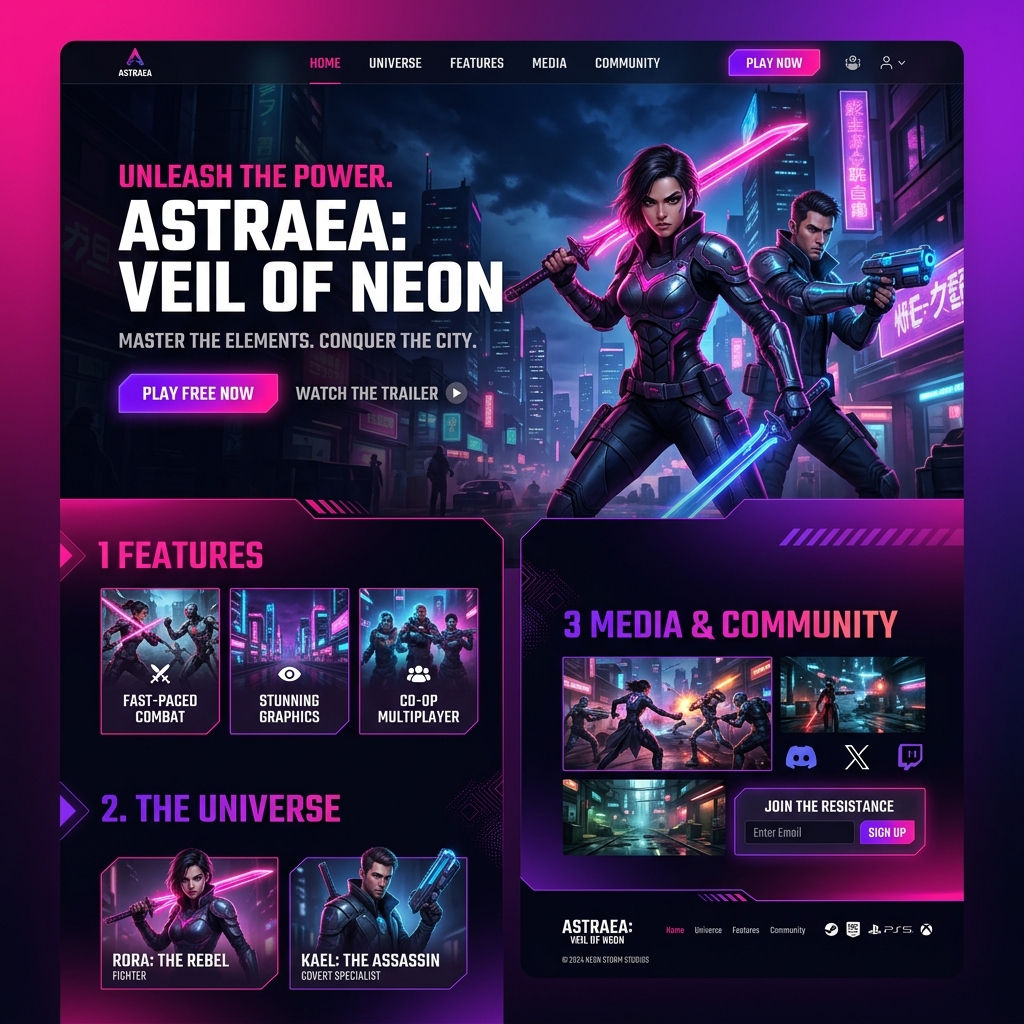
02 // Overview & Problem
The Situation
This project was an exercise in pushing frontend boundaries. The goal wasn't to replicate Rockstar's marketing — it was to build an immersive web experience that demonstrates what modern frontend engineering can achieve with scroll-driven animations, parallax layers, and cinematic pacing.
The Core Challenge
Most landing pages are static and predictable. The challenge was creating something that feels cinematic and interactive without sacrificing page performance or accessibility. Every animation had to serve the narrative, not just look impressive.
03 // Strategy & Approach
Insights & Discovery
Analyzed award-winning sites on Awwwards and FWA. Studied GSAP ScrollTrigger patterns, parallax implementation strategies, and performance optimization techniques for animation-heavy pages.
Architectural Blueprint
Layered composition: background parallax, mid-ground content reveals, and foreground interactive elements. Each section was designed as 'scene' in a larger story. Performance budgets were set before development began.
04 // Implementation & Hurdles
Execution & Build
Combined Framer Motion for component-level animations with GSAP ScrollTrigger for scroll-driven sequences. Vite provided fast development iteration. Tailwind handled layout and responsive design.
Technical Bottlenecks
Balancing visual richness with performance was the core tension. Heavy animations on mobile required careful optimization — reducing particle counts, simplifying parallax layers, and implementing intersection observers to pause off-screen animations.
05 // Outcome & Lessons
Final Deliverable Impact
A smooth, cinematic landing experience that maintains 60fps on modern devices. Demonstrates advanced frontend techniques that transfer directly to product work — onboarding flows, feature announcements, and marketing pages.
Key Takeaways
Performance isn't a post-development concern — it's an architectural decision. Setting performance budgets before writing code prevents the painful optimization phase that often follows creative development.
06 // Technical Specifications
07 // Roadmap & Next Steps
Exploring WebGL integration for 3D elements and experimenting with View Transitions API for smoother page-level animations.